
Exploring the Traditions, Mysteries, and Spiritual Symbolism Behind Halloween
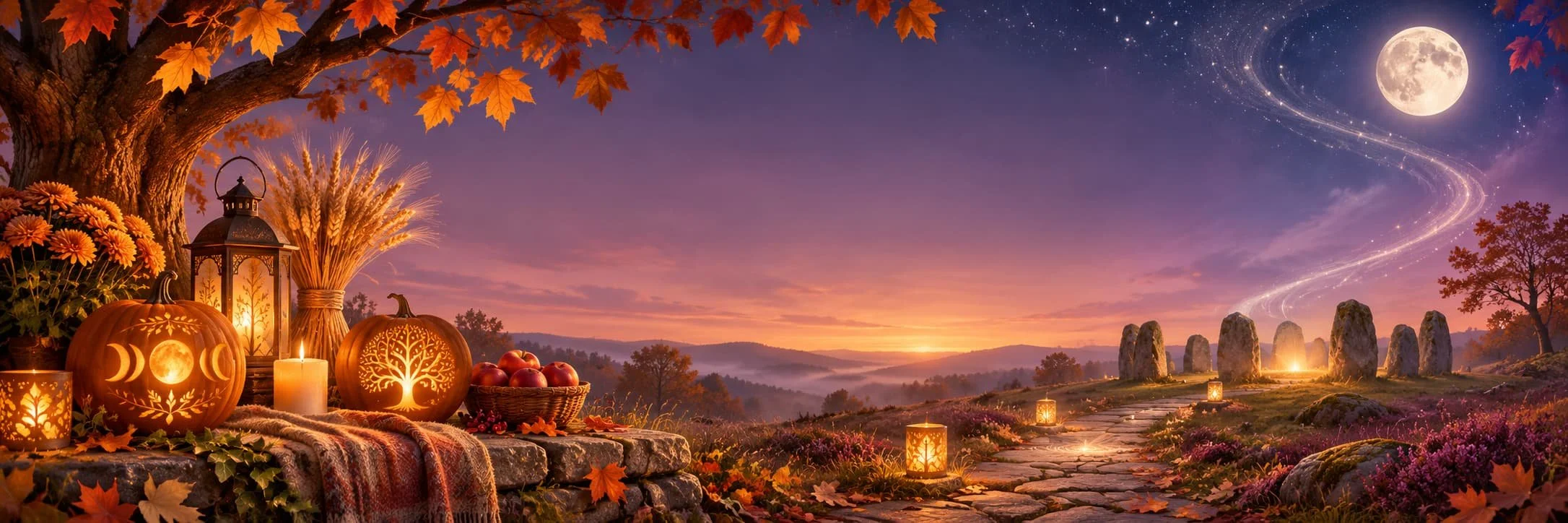
Every October, Halloween arrives in a whirlwind of glowing jack-o’-lanterns, elaborate costumes, haunted houses, and children eagerly collecting candy. We decorate our homes, carve pumpkins, and participate in traditions that have become a familiar part of our lives.
But how often do we stop to consider where these customs originated or what they meant to the people who practiced them long before Halloween became the celebration we recognize today?
Behind the costumes and candy lies a rich history of traditions honoring the changing seasons, our ancestors, and the mysteries of life and death.
The idea for this article came to me on Halloween morning while I was walking my dog through the rural high desert of Central Oregon. Deep in reflection, I found myself wondering about the origins of Halloween and the traditions we’ve come to celebrate each year. It was mostly my own curiosity that inspired me to start exploring, but I had no idea just how much I would uncover.
What began as a simple question during my morning walk led me into a fascinating world of ancient customs, spiritual beliefs, and stories that have evolved over centuries. The more I discovered, the more intrigued I became.
At times, the sheer amount of information felt almost overwhelming. Each discovery seemed to lead to another, and I soon realized there was far more to Halloween’s history than I could possibly explore in one article. What struck me most was how many of our familiar traditions connect to a time when people lived in closer harmony with Nature, honored those who had passed, and regarded the unseen world as an integral part of everyday life.
It made me wonder how much of that deeper meaning we’ve forgotten along the way.
Before Halloween: Honoring Life, Death, and Nature
Long before Halloween existed, ancient civilizations developed traditions honoring departed loved ones and the natural cycles of life and death. In Mesopotamia, families made offerings to their ancestors, while the Egyptians celebrated the deceased through elaborate spiritual rituals and festivals.
Although these traditions were not direct predecessors of Halloween, they reflect something that has connected humanity for thousands of years: our desire to remember those who came before us, understand the mysteries of existence, and honor our relationship with Nature.
Samhain: The Celtic Traditions Behind Halloween
One of the most important cultural traditions associated with Halloween is the Celtic festival of Samhain, pronounced SOW-in. Celebrated on November 1, Samhain marked the beginning of winter, although much of the celebration traditionally took place the evening before, on October 31. In Ireland, this evening was known as Oíche Shamhna, meaning the Eve of Samhain.
Crops had been gathered, livestock were brought in from the fields, and communities prepared for the colder, darker months ahead. For people whose survival depended upon agriculture and the natural rhythms of the Earth, this transition held enormous significance. The abundance of summer gave way to the stillness of winter, and the land entered a period of rest.
In some accounts of ancient Celtic traditions, Samhain is described as a turning point between the old year and the new. What I find especially intriguing is the belief that this transition existed beyond the ordinary passage of time, belonging fully to neither year. It was considered a sacred threshold, when the familiar boundaries between the physical and spiritual worlds were believed to become less distinct.
In Irish folklore, this was when the Otherworld was thought to be especially close. Spirits, fairies, and other supernatural beings were believed to move more freely between worlds. Departed loved ones might return to their former homes, while other encounters were considered potentially dangerous. Within these beliefs, remaining close to home after dark was considered wise.
Over the centuries, these seasonal beliefs became intertwined with traditional Irish Halloween celebrations. Families and neighbors gathered to enjoy the harvest, share food, and participate in seasonal festivities. Apples and nuts were featured in children’s games, while fortune-telling traditions offered playful glimpses into the future, including the possibility of discovering whom one might marry.
Halloween was also known as ghost night or spirit night, and special crosses were sometimes placed above doorways in hopes of preventing misfortune.
One Irish tradition I find particularly meaningful involved setting aside food and welcoming departed loved ones into the family home. Dublin Castle describes a custom known as a dumb supper, in which families prepared a meal in silence before symbolically welcoming their ancestors.
This tradition is especially close to my heart because every Halloween, I prepare goulash, a hearty family favorite and a tradition I carry on from my beloved mother, who has since passed. It’s something I’ve shared with my children and grandchildren, keeping a little piece of our family history alive. Every year, as I prepare this familiar meal, I think of my mother and feel her presence. It brings back so many wonderful memories and reminds me that the love we share continues long after someone has left this world.
I love the thought of families gathering around the table, sharing stories and memories, and including those who are no longer physically present in the familiar activities of family life. There is something beautiful about remembrance being expressed through such simple, everyday experiences.
Masks and disguises were another part of the celebrations, with roots in beliefs about the supernatural world. Wearing frightening masks was thought to help ward off unwanted spirits and other beings believed to roam freely on Halloween night. Over time, disguises also became part of the festivities, with groups of neighbors wearing homemade masks and visiting homes to entertain, play tricks, or startle unsuspecting residents.
What I find so compelling about these traditions is how naturally the spiritual and ordinary aspects of life existed together. There was laughter and celebration, but also reverence, remembrance, and a sense of mystery about what might exist beyond the physical world.
Although much of our detailed knowledge comes from medieval writings and later folklore, these accounts offer a fascinating glimpse into the beliefs and customs that contributed to Halloween’s evolution.
The Thinning Veil Between Worlds
One of the most intriguing spiritual interpretations associated with Samhain is the idea of a thinning veil between the physical and spiritual worlds.
What if the spiritual world is not somewhere distant, but another dimension of existence that generally remains beyond our everyday awareness?
This touches upon a question humanity has explored for thousands of years: What happens to consciousness beyond physical death, and what connection, if any, remains between the living and those who have departed?
For those of us who explore consciousness from a spiritual perspective, the idea of a veil between worlds invites us to contemplate existence beyond the limitations of physical form and remain open to mysteries we may not yet fully understand.
I also find meaning in the symbolism of Samhain as a threshold. We all experience times when one chapter of life is ending and another has yet to begin, when the familiar is falling away and we cannot quite see what lies ahead. These in-between moments can be deeply transformative, even when we don’t yet recognize what is emerging.
From Samhain to Modern Halloween
As Christianity spread throughout Europe, older seasonal customs gradually interacted with Christian religious observances.
November 1st became widely observed as All Saints’ Day, also known as All Hallows’ Day, while November 2nd became All Souls’ Day, a time to remember and pray for the departed. The evening preceding All Saints’ Day became known as All Hallows’ Eve, eventually shortened to Halloween.
Although it is sometimes claimed that the Church deliberately replaced Samhain with these celebrations, the historical relationship is more complicated. Halloween as we recognize it today developed through centuries of interaction among Celtic seasonal customs, Christian observances, European folklore, and later American traditions.
Irish and Scottish immigrants carried many of their customs to North America, where Halloween continued to evolve through community gatherings, costumes, seasonal games, and eventually trick-or-treating.
And while many of the original meanings have changed, we can still recognize traces of these older traditions in the customs we enjoy today.
The Forgotten Meaning Behind Our Halloween Traditions
Have you ever wondered why we carve pumpkins, dress in costumes, or send children from door to door collecting candy? My unquenchable thirst for knowledge, especially when it comes to uncovering deeper meaning in the things we often take for granted, kept me exploring. And the more I discovered about these familiar Halloween traditions, the more intrigued I became.
It’s really a never-ending rabbit hole, but I had to stop somewhere! So, here are a few of the fascinating stories behind the Halloween customs we’ve come to know and love.
Why We Carve Pumpkins
Long before pumpkins became Halloween’s most recognizable symbol, people in Ireland and Scotland carved frightening faces into turnips and other root vegetables, placing candles inside to discourage wandering spirits.
One fascinating Irish legend tells of Stingy Jack, a mischievous man who repeatedly tricked the Devil. According to one version of the folklore, when Jack died, he was denied entry into both Heaven and Hell, leaving him condemned to wander the Earth. With only a burning ember to guide him, Jack placed it inside a hollowed-out turnip. The story became associated with the figure of Jack-o’-Lantern.
In Irish Halloween folklore, frightening vegetable lanterns were associated with warding off Jack and other wandering spirits.
When Irish immigrants brought their traditions to America, they discovered that pumpkins were plentiful and much easier to carve. During the nineteenth century, pumpkin jack-o’-lanterns became an increasingly familiar part of American Halloween celebrations.
Today, pumpkin carving is primarily a joyful family activity, but I love the opportunity to bring a little deeper meaning into something so simple. We might choose to see that illuminated pumpkin as a symbol of the light we carry within ourselves, even during life’s darker seasons.
Why We Wear Costumes and Masks
The tradition of wearing frightening masks has some fascinating connections to Irish folklore. According to one belief, Halloween was a night when a supernatural gathering known as the fairy hunt traveled through the countryside, searching for unsuspecting people to carry into the Otherworld. Wearing a frightening mask or disguise was thought to help people avoid these encounters.
Over time, disguises also became part of community celebrations. The practice of guising involved dressing in costume and visiting neighboring homes, sometimes offering songs or performances in exchange for food or small gifts. These customs eventually contributed to the playful Halloween costumes we enjoy today.
But I find another layer of symbolism particularly intriguing.
Throughout our lives, we wear different identities that influence how we perceive ourselves and interact with the world. We become the parent, partner, professional, caretaker, achiever, or the person others expect us to be.
Some of these roles are beautiful expressions of who we are, while others develop through conditioning, expectations, and beliefs that gradually conceal aspects of our authentic nature.
Halloween gives us permission to step outside our ordinary identities, even if only for an evening. And when we look beyond the playful disguises, we might discover an opportunity for deeper self-reflection.
What masks have we learned to wear in our everyday lives, and which ones are we ready to remove?
Where Trick-or-Treating Came From
Our modern tradition of trick-or-treating also has connections to older European customs.
During medieval and later Christian observances, a practice known as souling involved visiting homes and receiving food, sometimes called soul cakes, in exchange for prayers offered on behalf of deceased loved ones.
Other traditions, including Irish and Scottish guising, involved costumed visitors entertaining neighbors in exchange for small gifts.
Modern American trick-or-treating developed through a combination of influences, including holiday masking, neighborhood visits, and seasonal mischief. By the twentieth century, it had become increasingly popular in North America, eventually evolving into the candy-centered celebration we recognize today.
And while commercialization has certainly changed Halloween, something meaningful remains within this simple tradition. We open our doors, welcome our neighbors, share something with others, and participate in a celebration that brings our communities together.
Día de los Muertos: Celebrating Life, Death, and Remembrance
While Halloween evolved through European and North American traditions, other cultures developed their own distinctive ways of honoring those who had passed beyond physical life.
One particularly beautiful example continues to be celebrated in Mexico.
Día de los Muertos, or Day of the Dead, is celebrated primarily on November 1 and 2. Its traditions reflect centuries of interaction between Indigenous Mexican cultural practices and Catholic observances introduced during Spanish colonization.
Although Día de los Muertos is not a precursor to Halloween, the celebrations share a similar time of year and offer a fascinating cultural comparison.
Families create beautiful altars, known as ofrendas, adorned with photographs, candles, marigolds, favorite foods, and meaningful offerings for departed loved ones. These traditions reflect beliefs about the temporary return of deceased family members and the continuing relationship between the living and the dead.
What I find especially beautiful is how remembrance becomes an expression of love and joy. Families gather to share stories, enjoy music and food, and celebrate the lives of those who have passed. Rather than focusing exclusively on loss, the celebration honors the enduring bonds of family and the place departed loved ones continue to hold within their communities.
What Have We Forgotten?
As I reflect upon these traditions, I find myself wondering whether we’ve lost some of our awareness of the deeper human experiences they represent.
Our ancestors lived in close relationship with the natural rhythms of the Earth. The changing seasons shaped their daily lives, celebrations, and spiritual observances. In many cultures, departed loved ones continued to hold a meaningful place within family traditions, even after their physical lives had ended.
Today, we can become so occupied with responsibilities and everyday demands that we lose touch with these connections. Death is often treated as something to avoid discussing, while periods of uncertainty and change can leave us uncomfortable with the unknown.
Yet Nature continually reminds us that transformation is an essential part of existence. The trees release their leaves, the Earth enters its season of rest, and beneath the apparent stillness, the possibility of new life remains.
Throughout our lives, we experience our own seasons of change. We release identities we’ve outgrown, navigate unfamiliar circumstances, and discover new expressions of who we are. Sometimes these transitions are joyful, while others require us to find our way through uncertainty.
We often resist these periods, holding tightly to the familiar or believing that we should always be moving forward in some visible way. But Nature reminds us that growth and renewal are not always apparent on the surface.
The rhythms of Nature are not separate from our own lives. We experience these same cycles of change, release, and renewal within ourselves.
This is where I believe the deeper symbolism associated with Halloween becomes especially meaningful. It invites us to honor life’s transitions, remember those who came before us, and recognize our place within the greater unfolding of existence.
Bringing the Sacred Meaning of Halloween Back Into Our Lives
I don’t believe we need to abandon the costumes, pumpkins, decorations, or joyful traditions we love to rediscover Halloween’s deeper significance.
We can simply bring a little more intention into our celebrations.
What if Halloween also became an opportunity to gather with our families, remember those who came before us, and reconnect with the rhythms of Nature?
We can begin with something beautifully simple.
A Family Ritual of Remembrance and Renewal
On Halloween evening, consider creating a small, sacred space in your home. Gather a candle, photographs of departed loved ones, and perhaps an autumn leaf, a stone, or something meaningful from Nature.
Light the candle as a symbol of remembrance and the light that continues through life’s changing seasons.
Take a few moments together to honor loved ones who are no longer physically present. Speak their names, share a favorite memory, or tell a family story that younger generations may never have heard. You might even prepare a favorite family recipe or share something meaningful that has been passed down through generations.
Allow laughter and tears to coexist. Both are expressions of love.
Then turn your attention to the changing season. Just as the trees release their leaves and the Earth prepares for rest, reflect upon something you might be ready to release within your own life. Perhaps an old fear, a disappointment, or an expectation that no longer reflects who you are.
Invite everyone, including the children, to share something they are grateful for and something they would like to welcome into their lives.
You might close with a simple expression of gratitude:
We honor those who came before us and remember those we love, both seen and unseen.
We give thanks for the lives, stories, and wisdom that continue through us.
We honor the sacred cycles of life, death, transformation, and renewal.
We release what has completed its season and welcome the unfolding of what is yet to come.
May we remember that love is never lost, and that even within the darkness, the seeds of new life are quietly awakening.
These small moments of intention can make familiar traditions even more meaningful, creating memories that connect generations while honoring our relationship with Nature and the mysteries of existence.
Beyond the Masks: Remembering What Matters
Halloween has changed considerably over the centuries, and I love that it continues to bring families and communities together through imagination, laughter, and celebration. But exploring its history has given me a greater appreciation for the traditions that came before us and the wisdom they continue to offer.
We can enjoy everything we love about Halloween while also making space to remember those who have passed, honor the changing seasons, and reflect upon our own lives.
Because perhaps the greatest gift of Halloween is not found in what frightens us, but in what it invites us to remember: the sacredness of life, the enduring presence of love, and our place within the beautiful, ever-changing cycles of existence.
Historical Sources and Further Reading
The history of Halloween is far richer and more complex than any one article can fully explore. I’ve touched upon some of the traditions and spiritual themes that I find especially meaningful, but there are many more stories, regional customs, and historical perspectives worth discovering. If you’re curious to explore further, I encourage you to visit the resources below and continue discovering the fascinating history behind this celebration.
National Museum of Ireland — The Winter Solstice at Newgrange
National Museum of Ireland — Traditions and Customs of Halloween/Samhain
English Heritage — A Brief History of Halloween, All Saints’ Day and All Souls’ Day
About the Author
Shannon MacDonald is a bestselling author, intuitive channel, healer, and spiritual guide whose work explores spiritual awakening, conscious evolution, self-awareness, and human transformation. Through her books, teachings, and guided experiences, she helps others reconnect with their inner wisdom and embrace a more conscious, aligned, and meaningful way of living.